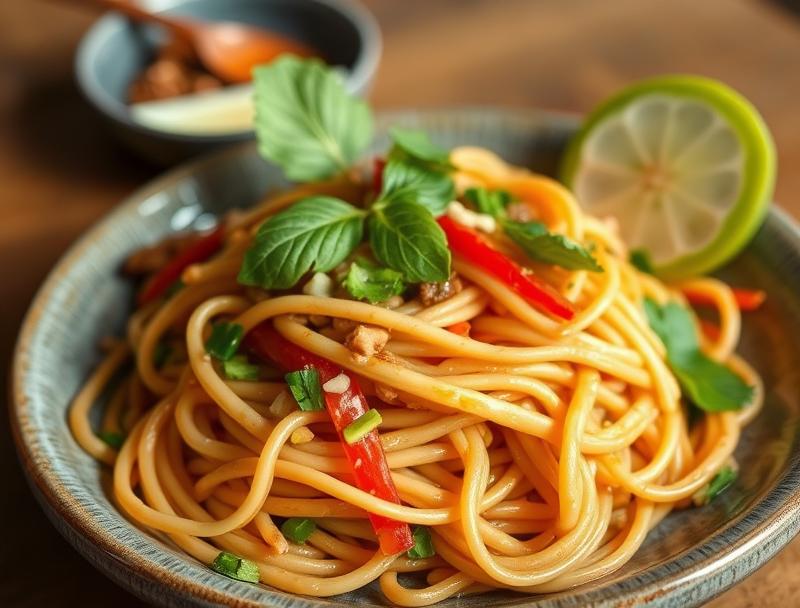
Ultimate Simple Vegetarian Pad Thai Recipe
Introduction
Imagine a dish that embodies the perfect balance of sweet, sour, and savory, all while being incredibly easy to make and requiring only the most accessible ingredients. Welcome to the world of Pad Thai, a quintessential Thai dish that has captured the hearts and taste buds of people around the globe. This Ultimate Simple Vegetarian Pad Thai Recipe is designed to guide you through the preparation of a mouth-watering, authentic-tasting Pad Thai, using everyday ingredients that are easily found in most supermarkets. The beauty of this recipe lies not only in its simplicity but also in its versatility, allowing you to get creative with the ingredients and make it your own. Whether you’re a seasoned chef or a beginner in the kitchen, this recipe promises to deliver an impressive and delicious meal with minimal effort.
Why This Works
- Flavor balance and ingredient accessibility: This recipe strikes a perfect balance between the sweet, sour, salty, and umami flavors, using ingredients that are readily available, making it accessible to anyone looking to try their hand at Thai cuisine.
- Ease of preparation: The steps involved in preparing this Vegetarian Pad Thai are straightforward and simple, requiring minimal cooking skills and techniques, making it perfect for a quick weeknight dinner or a weekend meal.
- Impressive results with minimal effort: Despite its simplicity, this recipe yields a dish that is not only delicious but also visually appealing, sure to impress your family and friends with the vibrant colors and the appetizing presentation.
Ingredients
- 1 cup of rice noodles
- 2 tablespoons of vegetable oil
- 1 onion, thinly sliced
- 2 cloves of garlic, minced
- 1 cup of mixed vegetables (bean sprouts, carrots, green onions)
- 1 cup of tofu, cut into small pieces
- 2 tablespoons of tamarind paste
- 2 tablespoons of palm sugar
- 1 tablespoon of soy sauce
- 1 tablespoon of lime juice
- 1 teaspoon of grated ginger
- Salt and pepper, to taste
- Chopped peanuts and lime wedges, for garnish
Instructions
- Step 1: Begin by preparing your ingredients. Slice the onion, mince the garlic, cut the tofu into small pieces, and grate the ginger. Also, soak the rice noodles in hot water according to the package instructions and set aside.
- Step 2: In a large wok or frying pan, heat the vegetable oil over medium heat. Add the sliced onion and cook until it’s translucent, then add the minced garlic and cook for another minute, stirring constantly to prevent burning.
- Step 3: Add the mixed vegetables and cooked tofu to the pan. Stir-fry for about 2-3 minutes, or until the vegetables are tender but still crisp. Then, add the tamarind paste, palm sugar, soy sauce, and lime juice to the pan, stirring well to combine. Let it simmer for a couple of minutes to allow the flavors to meld together.
- Step 4: Add the cooked noodles to the pan, stirring everything together to combine. Cook for an additional 2-3 minutes, ensuring the noodles are well coated with the sauce. Season with salt and pepper to taste. Finally, garnish with chopped peanuts and serve with lime wedges on the side.
Handy Tips
- For an added crunch, you can include some chopped fresh vegetables like bean sprouts or carrots in the dish just before serving.
- Substitute tofu with tempeh or seitan for a different texture and flavor.
- Avoid overcooking the noodles, as they can become mushy and unappetizing. Drain them as soon as they’re done and set aside to prevent them from becoming sticky.
Heat Control
When cooking the Pad Thai, it’s crucial to control the heat to prevent the ingredients from burning or the noodles from sticking to the pan. Start with medium heat for the initial stir-fry, then adjust as needed. Ideally, you want to maintain a gentle simmer when combining the sauce and noodles to ensure everything cooks evenly and the flavors meld together beautifully.
Crunch Factor
Achieving the right crunch factor in your Pad Thai can elevate the dish from good to great. This can be accomplished by not overcooking the vegetables, adding nuts or seeds like peanuts or sesame seeds, and serving the dish immediately after preparation. The combination of soft noodles, tender vegetables, and crunchy nuts provides a satisfying texture that complements the rich flavors of the dish.
Pro Kitchen Tricks
- Use a wok: If you have access to a wok, use it. The shape and material of a wok are ideal for stir-frying, allowing for quick and even cooking.
- Prepare ahead: Chop all your ingredients before starting to cook. This not only saves time but also ensures that everything is added to the pan at the right moment, preventing overcooking or undercooking of any ingredients.
- Clean as you go: To avoid a messy kitchen, clean up as you go. This habit is especially useful in recipes like Pad Thai, where ingredients are prepared and then set aside until use.
Storage Tips
- Leftovers can be stored in an airtight container in the refrigerator for up to 2 days. Reheat gently over low heat, adding a bit of water if the noodles seem dry.
- For longer storage, consider freezing the dish. However, it’s best to freeze the sauce and noodles separately to prevent the noodles from becoming soggy. Combine and reheat when needed.
- Use glass or plastic containers that are designed for microwave and freezer use to ensure safe reheating and storage.
Gift Packaging Ideas
If you’re considering gifting this dish, perhaps for a potluck or as a care package, you can package it in a decorative microwave-safe container. Add some garnishes like fresh herbs, a sprinkle of peanuts, or a slice of lime on top for a pop of color. Include a set of instructions for reheating and a personal note for a thoughtful touch.
Flavor Variations
- Different spices: Experiment with various spices like cumin, coriander, or cinnamon to give your Pad Thai a unique twist.
- Creative toppings: Offer a variety of toppings such as diced mango, pickled ginger, or toasted coconut flakes to allow everyone to customize their dish.
- Ingredient swaps: Substitute the tofu with other protein sources like eggs, tempeh, or seitan, or use different types of noodles for a change in texture.
Troubleshooting
- Texture problems: If your noodles are too sticky, try rinsing them with cold water after cooking. For vegetables that are too soft, reduce the cooking time in the future.
- Ingredient replacements: If you can’t find tamarind paste, you can make a substitute by mixing equal parts of lime juice and brown sugar. For soy sauce, tamari or coconut aminos can be used as alternatives.
- Over/undercooking signs: Noodles that are overcooked will be mushy and cling together. Undercooked noodles will be hard and crunchy. Adjust your cooking time based on the package instructions and your personal preference.
FAQs
- Can I freeze it? Yes, you can freeze the Pad Thai, but it’s recommended to freeze the sauce and noodles separately for the best results.
- Is it gluten-free? This recipe is gluten-free, but ensure that the soy sauce or any store-bought ingredients you use are gluten-free to accommodate dietary restrictions.
- Can I double the recipe? Yes, you can easily double or triple this recipe for larger gatherings. Just remember to adjust the cooking time slightly if you’re making a larger batch.
Conclusion
This Ultimate Simple Vegetarian Pad Thai Recipe is more than just a dish; it’s an experience. It’s about exploring the vibrant flavors of Thailand, enjoying the simplicity of preparation, and sharing delicious meals with loved ones. Feel free to experiment and make this recipe your own, whether that means adding your favorite vegetables, trying different seasonings, or serving it in unique ways. The beauty of cooking lies in its endless possibilities, and this Pad Thai recipe is a perfect canvas for your culinary creativity. So, go ahead, give it a try, and enjoy the journey of flavors and fun that comes with cooking and sharing a wonderful meal.
Ultimate Simple Vegetarian Pad Thai Recipe
A simple and delicious vegetarian Pad Thai recipe, perfect for a quick and flavorful meal.
🥘 Ingredients
👩🍳 Instructions
-
1Prepare all ingredients by slicing, mincing, and grating as needed.
-
2Heat oil in a wok or large frying pan over medium heat, then add the sliced onion and cook until translucent.
-
3Add the mixed vegetables and cooked tofu to the pan, stir-frying until the vegetables are tender.
-
4Combine the tamarind paste, palm sugar, soy sauce, and lime juice in the pan, stirring well to combine, then add the cooked noodles and stir-fry until everything is well coated with the sauce.
-
5Season with salt and pepper to taste, then garnish with chopped peanuts and serve with lime wedges on the side.