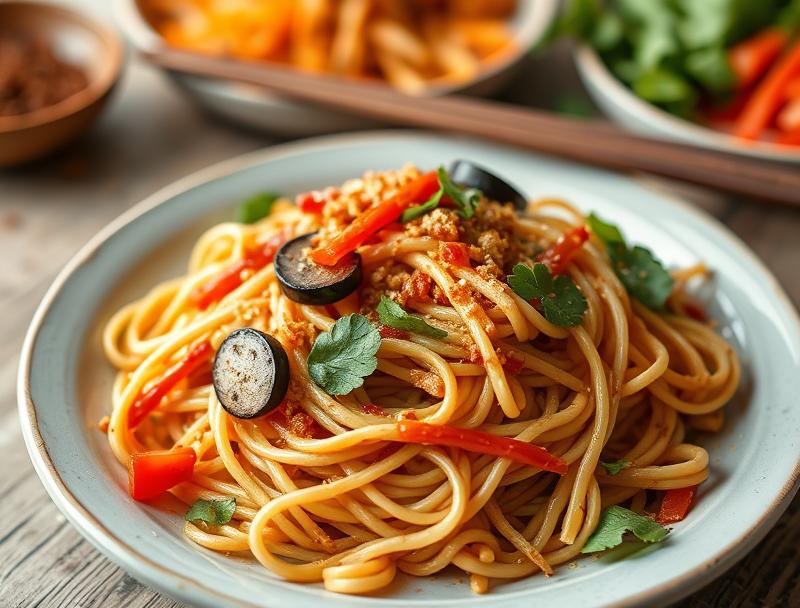
Delicious Vegetarian Pad Thai in Minutes
Introduction
Imagine savoring the bold, sweet, and sour flavors of Thailand in the comfort of your own home, all in a matter of minutes. Our Delicious Vegetarian Pad Thai recipe brings you the authentic taste of this beloved dish, using everyday ingredients that are easily accessible and creatively combined. This recipe is not just about the flavor; it’s also incredibly easy to make, requiring minimal effort for impressive results. Whether you’re a vegetarian looking for a new favorite dish or simply someone who loves exploring global cuisines, this recipe is perfect for you. With its balance of flavors, ease of preparation, and the versatility to customize according to your taste, it’s a must-try for anyone looking to spice up their meal routine.
Why This Works
- Flavor balance and ingredient accessibility: This recipe strikes a perfect balance between sweet, sour, and savory, using ingredients that are readily available in most supermarkets.
- Ease of preparation: The steps are straightforward, and the dish can be prepared in no more than 30 minutes, making it ideal for busy weeknights or quick lunches.
- Impressive results with minimal effort: Despite its simplicity, the dish presents beautifully and tastes like it was made in a professional kitchen, sure to impress family and friends.
Ingredients
- 1 cup of rice noodles
- 2 tablespoons of vegetable oil
- 1 onion, thinly sliced
- 2 cloves of garlic, minced
- 1 cup of mixed vegetables (bean sprouts, carrots, green onions)
- 1 cup of tofu, cut into small pieces
- 2 tablespoons of tamarind paste
- 2 tablespoons of soy sauce
- 1 tablespoon of palm sugar
- 1 tablespoon of lime juice
- Salt and pepper, to taste
- Chopped peanuts and lime wedges, for garnish
Instructions
- Step 1: Begin by cooking the rice noodles according to the package instructions. Typically, this involves soaking them in hot water for about 5 minutes until they are soft and pliable, then draining them in a colander.
- Step 2: In a large skillet or wok, heat the vegetable oil over medium heat. Add the sliced onion and cook until it starts to soften, about 3 minutes. Then, add the minced garlic and cook for another minute, stirring constantly to prevent burning.
- Step 3: Add the mixed vegetables and tofu to the skillet. Cook, stirring occasionally, until the vegetables are tender-crisp, about 4 minutes. Then, add the cooked noodles to the skillet, stirring to combine with the vegetables and tofu.
- Step 4: In a small bowl, whisk together the tamarind paste, soy sauce, palm sugar, and lime juice to make the sauce. Pour the sauce over the noodles and vegetables in the skillet, and stir-fry for about 2 minutes, until everything is well coated with the sauce. Season with salt and pepper to taste.
Handy Tips
- For an extra crunchy texture, add some chopped nuts or seeds towards the end of the stir-fry.
- Feel free to customize the mixed vegetables according to your preference or what’s available in your fridge.
- If you can’t find tamarind paste, you can substitute it with a mixture of equal parts soy sauce and lime juice, though the flavor will be slightly different.
Heat Control
When stir-frying, it’s essential to control the heat to prevent burning. Start with medium heat and adjust as needed. If using a wok, which distributes heat evenly, you can cook at a higher heat for a shorter time. Always stir constantly when adding new ingredients to the skillet to ensure they cook evenly.
Crunch Factor
Achieving the right texture is key to a great Pad Thai. The noodles should be soft, the vegetables crisp, and the addition of peanuts or seeds provides a satisfying crunch. To maintain the crunch of the vegetables, don’t overcook them; they should still have a bit of bite when you’re done.
Pro Kitchen Tricks
- Prepare all your ingredients before starting to cook. This includes chopping the vegetables, cooking the noodles, and mixing the sauce. Having everything ready will make the cooking process much smoother and faster.
- Use a wok if you have one. The shape of a wok allows for efficient stir-frying, and its large volume means you can cook a lot of food at once without overcrowding the pan.
Storage Tips
- Leftover Pad Thai can be stored in the refrigerator for up to 3 days. It’s best to store the noodles, vegetables, and sauce separately to prevent the noodles from becoming soggy.
- Reheat the dish in a skillet or wok over low heat, adding a bit of water if the noodles seem dry.
- For longer storage, consider freezing the cooked noodles and vegetables separately, then thawing and combining with freshly made sauce when you’re ready to eat.
Gift Packaging Ideas
If you’re considering gifting this dish, perhaps for a potluck or as a meal for a friend, you can package it in a decorative take-out box or a microwave-safe container. Add some fresh lime wedges, chopped peanuts, and a sprinkle of sesame seeds on top for a beautiful presentation. Include a small bottle of soy sauce or a packet of chili flakes on the side for added flavor.
Flavor Variations
- Different spices: Add a sprinkle of cumin or coriander for a slightly smoky flavor, or use sriracha for an extra spicy kick.
- Creative toppings: In addition to peanuts, consider using sesame seeds, diced mango, or pickled carrots as toppings for added texture and flavor.
- Ingredient swaps: Substitute the tofu with tempeh or seitan for a different texture, or use zucchini noodles for a low-carb version.
Troubleshooting
- Texture problems: If your noodles are too sticky, rinse them with cold water. If your vegetables are too soft, cook them for less time next time.
- Ingredient replacements: If you can’t find a specific ingredient, look for substitutes that offer similar flavor profiles. For example, if you can’t find tamarind paste, a combination of soy sauce and lime juice can work in a pinch.
- Over/undercooking signs: Noodles that are overcooked will be mushy, while undercooked noodles will be hard in the center. Adjust your cooking time based on the package instructions and your personal preference.
FAQs
- Can I freeze it? Yes, you can freeze the cooked noodles and vegetables, but it’s best to make the sauce fresh when you’re ready to eat.
- Is it gluten-free? This recipe is gluten-free, but always check the ingredients of your soy sauce and tamarind paste to ensure they are gluten-free.
- Can I double the recipe? Yes, simply multiply all the ingredients by two. Keep an eye on the cooking time, as a larger quantity may take a bit longer to cook through.
Conclusion
Making Delicious Vegetarian Pad Thai in minutes is not only possible but also incredibly rewarding. With its vibrant colors, enticing aromas, and explosion of flavors, this dish is sure to become a staple in your kitchen. Feel free to experiment with the recipe, adding your favorite vegetables or spices to make it your own. Whether you’re cooking for one or for a crowd, this recipe scales beautifully and is sure to impress. So, go ahead, give it a try, and enjoy the delightful taste of Thailand in the comfort of your own home.
Delicious Vegetarian Pad Thai in Minutes
A quick and easy vegetarian Pad Thai recipe made with rice noodles, mixed vegetables, and a flavorful tamarind sauce.
🥘 Ingredients
👩🍳 Instructions
-
1Cook the rice noodles according to the package instructions.
-
2Heat the vegetable oil in a large skillet or wok over medium heat, then add the sliced onion and cook until softened.
-
3Add the mixed vegetables, tofu, and cooked noodles to the skillet, stirring to combine.
-
4Pour the tamarind sauce over the noodles and vegetables, and stir-fry for about 2 minutes, until everything is well coated with the sauce.